

2026 ANESTHESIA RESEARCH DAY
A PARTNERSHIP WITH DALHOUSIE PAIN NETWORK
May 11, 2026
In Person: Halifax Convention Centre; 1650 Argyle Street, Halifax
KEYNOTE SPEAKERS
Anesthesia Keynote - Jessica Spence
 Assistant Professor, Department of Anesthesia, McMaster University
Affiliate Appointments, Departments of Medicine (Critical Care) and Health Research Methods, Evidence, and Impact
Scientist, Population Health Research Institute, Hamilton Health Sciences
Short Bio:
Jessica Spence is a cardiac anesthesiologist and intensivist at Hamilton Health Sciences, a Scientist at the Population Health Research Institute, and an Assistant Professor at McMaster University who began her faculty position in 2021. She completed residency in anesthesiology, a fellowship in Critical Care Medicine, and a PhD in Clinical Epidemiology at McMaster University. She completed fellowship in Cardiac Anesthesiology and TEE training at the University of Toronto. She is an active Clinician Scientist, and leads a research program that evaluates the effect of non-surgical intraoperative interventions on the postoperative outcomes of patients undergoing cardiac surgery.
Topic: Perioperative benzodiazepines: should we use them in our patients?
Learning Objectives: After this program, participants will be able to:
- Describe the evidence supporting the benefits of perioperative benzodiazepines in patients undergoing cardiac and noncardiac surgery (CanMEDS roles: Medical Expert, Scholar, Health Advocate)
- Describe the evidence supporting the harms of perioperative benzodiazepines in patients undergoing cardiac and noncardiac surgery (CanMEDS roles: Medical Expert, Scholar, Health Advocate)
- Develop a practical approach to the clinical application of benzodiazepines during the perioperative period surgery (CanMEDS roles: Medical Expert, Scholar, Collaborator)
Dr. Spence's profile : https://experts.mcmaster.ca/people/spencj2.
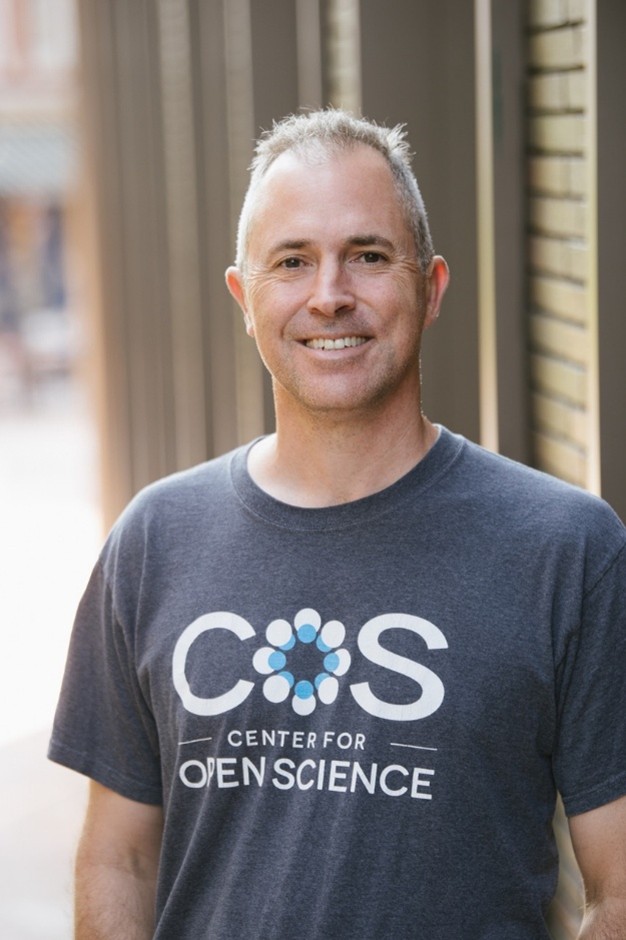
Collaborative Keynote - Brian Nosek, PhD.
 Professor, University of Virginia, Department of Psychology
Short Bio:
Brian Nosek co-developed the Implicit Association Test, a method that advanced research and public interest in implicit bias. Nosek co-founded three non-profit organizations: Project Implicit to advance research and education about implicit bias (http://projectimplicit.net/), the Society for the Improvement of Psychological Science to improve the research culture in his home discipline (http://improvingpsych.org/), and the Center for Open Science (COS; http://cos.io/) to improve rigor, transparency, integrity, and reproducibility across research disciplines. Nosek is Executive Director of COS and a professor at the University of Virginia. Nosek's research and applied interests are to understand why people and systems produce behaviors that are contrary to intentions and values; to develop, implement, and evaluate solutions to align practices with values; and, to improve research credibility and cultures to accelerate progress.
Topic: Shifting incentives from getting it published to getting it right
The currency of academic science is publishing. Producing novel, positive, and clean results maximizes the likelihood of publishing success because those are the best kind of results. There are multiple ways to produce such results: (1) be a genius, (2) be lucky, (3) be patient, or (4) employ flexible analytic and selective reporting practices to manufacture beauty. In a competitive marketplace with minimal accountability, it is hard to avoid (4). But there is a way. With results, beauty is contingent on what is known about their origin. With methodology, if it looks beautiful, it is beautiful. The only way to be rewarded for something other than the results is to make transparent how they were obtained. With openness, I won’t stop aiming for beautiful papers, but when I get them, it will be clear that I earned them.
Learning Objectives: After this program, participants will be able to:
- Summarize the scholarly norms and values of research (CanMEDS roles: Medical Expert, Scholar)
- Assess the gap between those values and the culture and reward system for researchers (CanMEDS roles: Medical Expert, Scholar)
- Describe strategies that are changing the norms, incentives, and policies for researchers and consider their applicability for one's own research area (CanMEDS roles: Scholar, Communicator, Collaborator)
Dr. Nosek's profile : https://psychology.as.virginia.edu/people/brian-nosek.